
Abbeville County Sex Offender Checks
The free South Carolina Sex Offender Registry Tool, usually called SORT, is the primary public source for an Abbeville County sex offender lookup. SLED maintains the statewide system. County sheriffs provide and update the local registration data, so the state portal and the Abbeville County Sheriff's Office are parts of one process rather than rival databases. SORT supports both a person's name and a place-based search. Start with the fact that is least likely to be wrong, then use the map, photographs, aliases, physical description, registered address, and offense information to distinguish a result.
SLED warns that address and status details can change quickly. Some data may come from the registrant before local staff verify it. A mapped home is therefore a registry entry, not proof that someone is physically present when the map is viewed. If a result seems wrong, do not confront the person. The proper route is SLED's registry unit or Capt. Ken Smith at the Abbeville County Sheriff's Office. CATCH is not a substitute because SLED states that its paid criminal-history search does not include a registry check.
Entering Abbeville County SORT
The official SLED registry entry page places conditions of use and a verification code before the live search. SLED recommends a current version of Edge or Chrome and warns that Firefox and Safari may behave unpredictably. Read the terms, complete the captcha, and continue to SORT before choosing a name or location query. This gate helps explain why a bookmarked result may not act like a permanent public record link.
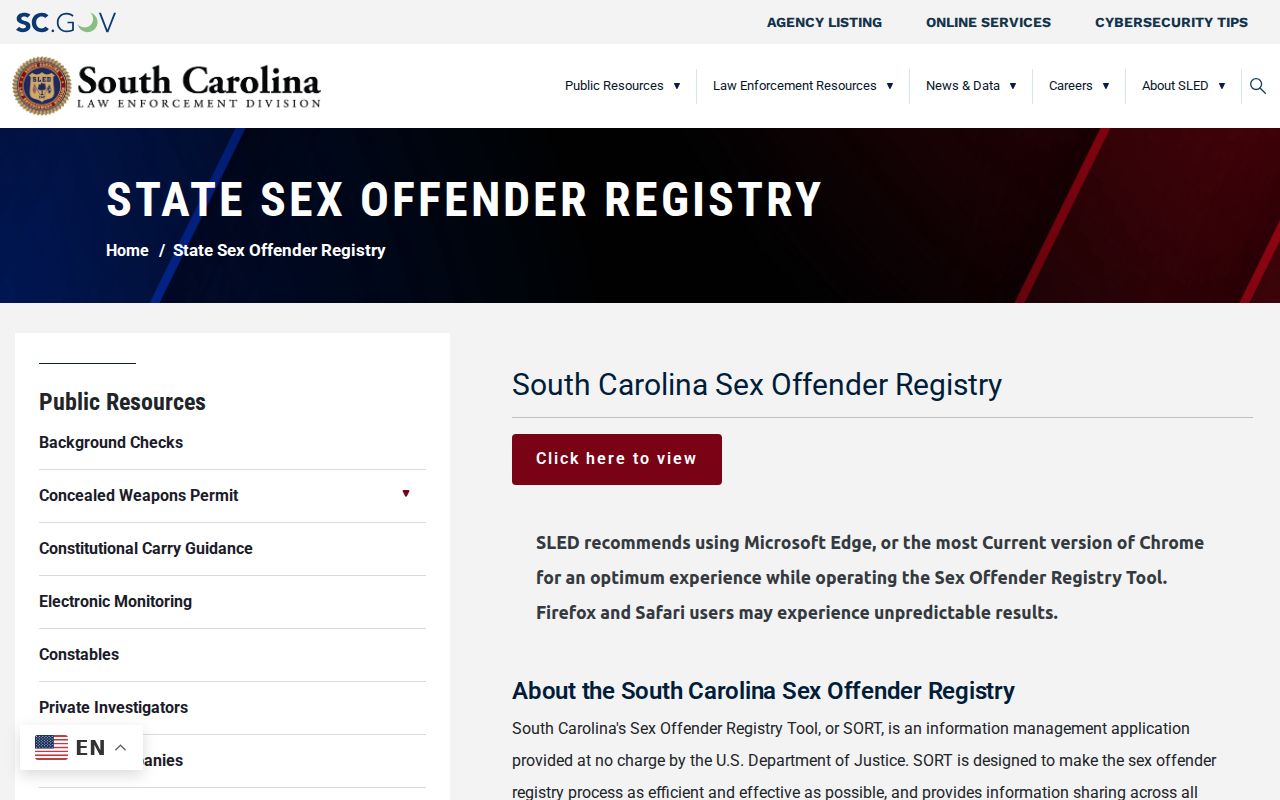
The SLED entry screen is the official starting point for Abbeville County registry searches, correction instructions, removal guidance, and community-notification enrollment.
South Carolina Sex Offender Registry Tool Searches
A location search works well for neighborhood awareness in Abbeville County. Use the address or geographic controls that the live form presents, then read map and list results together. A name search is better when a known name or alias is available. Neither route should depend on a single matching detail. Compare the image, aliases, physical traits, address, and offense history before deciding that a result refers to the person or place of interest.
- Open SLED's registry page, read and accept its conditions, then enter the displayed verification code.
- Select the name or location search and supply only the criteria requested by the current SORT interface.
- Review the map and list together. Treat each pin as a search aid, not proof of a person's location at that moment.
- Open the needed profile and compare several identifiers. Send a possible error or compliance concern to SLED or the sheriff without confronting anyone.
| Field Label | Type | Required | Notes |
|---|---|---|---|
| Conditions of Use | Acceptance | Yes | Agreement is required before SORT opens. |
| Verification code | Captcha text | Yes | Enter the code shown, then continue. |
| Name search | Text fields | No | Supports a registrant name or alias search. |
| Location or address | Location input | No | Supports place-based and mapped results. |
| Community Notifications | Link and form | No | Requires contact and location details plus a separate agreement. |
| Map and list controls | Interface controls | No | Use both views to assess a place-based result. |
Abbeville Searches Across State Lines
The National Sex Offender Public Website brings participating jurisdictions into one federal search layer. It is useful when a person recently moved, an address lies near a state line, or the inquiry is not limited to South Carolina. NSOPW supplements SORT. It does not replace SLED's instructions, tier guidance, correction channel, or the Abbeville County sheriff's role in local data.
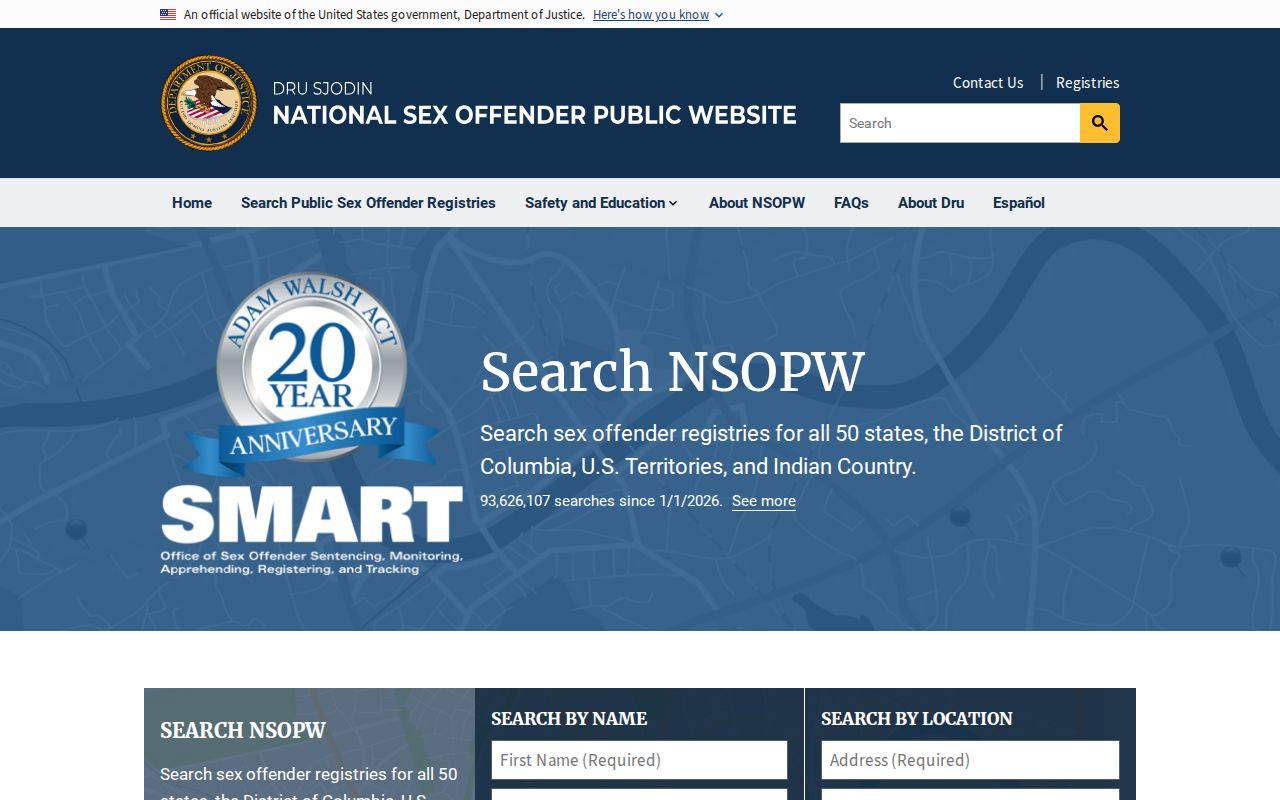
A no-result should be assessed with spelling, aliases, address changes, jurisdiction participation, and each system's notices in mind. For a South Carolina entry, return to SORT for the state-maintained profile and agency contacts.
Registry Profiles: What They Show
SLED says a public SORT profile can show multiple photographs over time, aliases, a visual residence map, and all sexually related offenses of conviction. Typical public fields also describe physical traits, the registered address, registration or compliance status, and conviction information. Those details help a searcher separate similar names. They do not predict future conduct, establish that a person is at the mapped point now, or turn a registry record into a full criminal-history report.
| Name & Aliases | Names and known aliases used to distinguish the listed registrant. |
|---|---|
| Photos & Physical Description | Multiple photographs over time and public identifying traits. |
| Registered Address | The reported residence with a visual map; it can change before verification. |
| Offense Information | Sexually related offenses of conviction and related conviction details. |
| Level or Tier | The statutory category tied to an offense and possible removal route, not a simple danger score. |
| Registration Status | Public status or compliance information made available through SORT. |
Abbeville Registry Questions and Corrections
The Abbeville County Sheriff's Office handles local registration questions, and its staff listing identifies Capt. Ken Smith with Sex Offender Registry and evidence-custody duties. The office is at 21 Old Calhoun Falls Road, Abbeville, SC 29620, and the main number is 864-446-6000. Call before visiting to confirm where a specific registration matter is handled. The research did not establish a separate public local registry map or a posted registration-counter schedule, so SORT remains the documented public search route.
For a possible statewide profile error, SLED SOR may be reached at PO Box 21398, Columbia, SC 29210, by phone at 803-896-2601, by fax at 803-896-2311, or at sor@sled.sc.gov. A suspected failure to register should go to SLED or the sheriff. Use 911 only for an immediate emergency. Do not attempt personal verification at a listed address.
The SLED fingerprint-reporting update shows why identity details and agency reporting matter across state record systems.
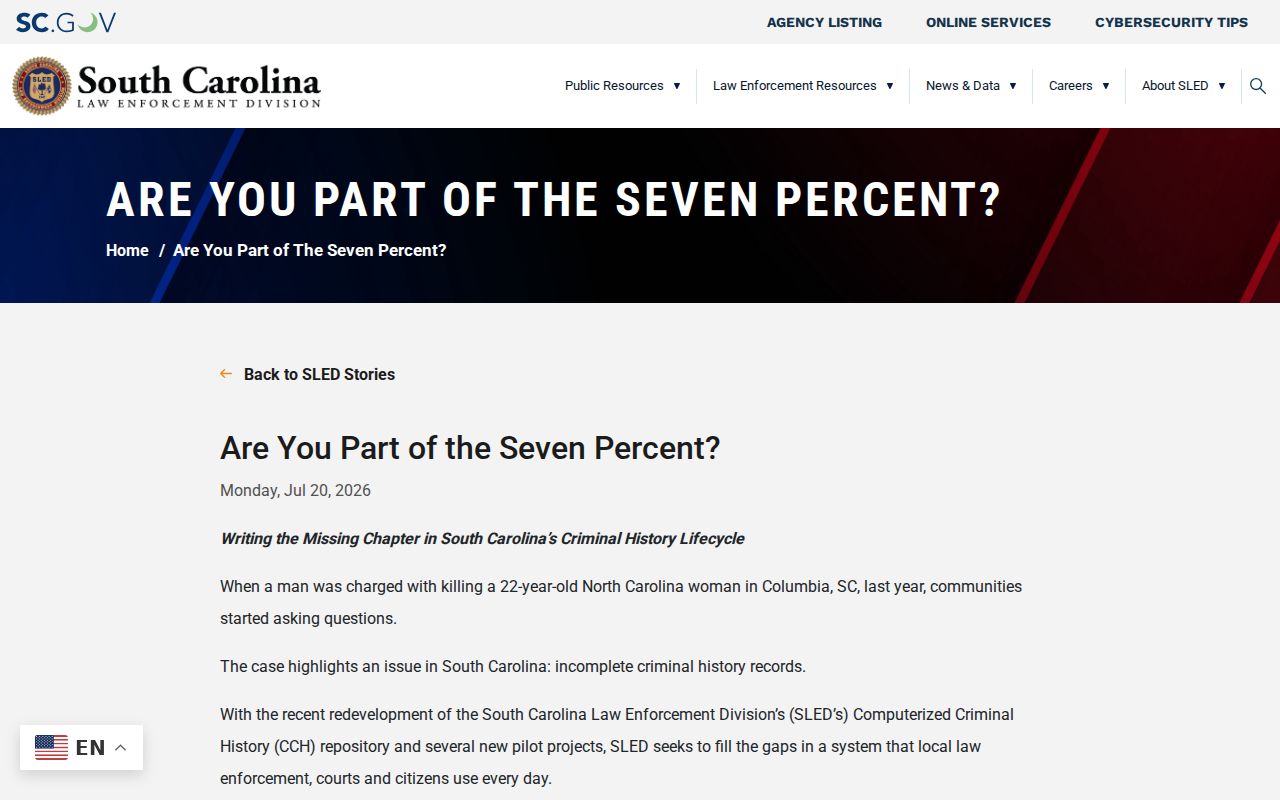
Although the update addresses the wider criminal-history repository, its core lesson applies here: reliable identity matching depends on official records and more than a name alone.
Registration Levels and Duties in South Carolina
South Carolina's tiers are statutory categories tied to qualifying offenses and removal procedures. They should not be relabeled as low, medium, or high predictions of current danger. The table states the earliest route described by SLED, not an automatic end date. A registrant must keep registering unless and until SLED or the proper court gives formal written notice that the duty has ended. SLED's published material did not supply one universal verification frequency for the tier rows, so no frequency is invented here.
The official South Carolina registry law supplies the tier and public-disclosure framework.
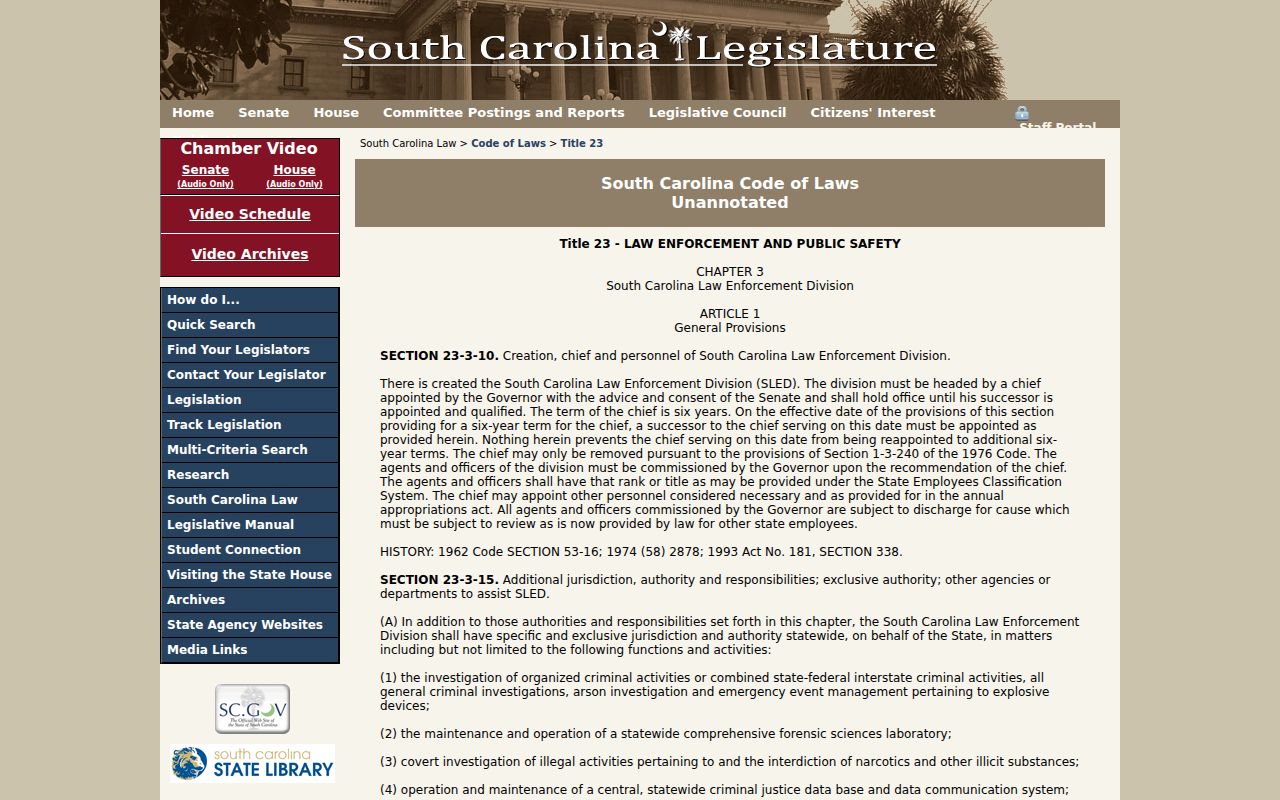
The statute gives the legal framework behind SORT, while SLED's current instructions explain how an administrative request or court motion is made.
| Level or Tier | Earliest Removal Route | Public Duty While Pending |
|---|---|---|
| Tier I adult | Administrative request after at least 15 years, measured from the applicable registration, discharge, or end-of-supervision point. | Registration continues until written SLED approval. |
| Tier II adult | Administrative request after at least 25 years, subject to conviction, compliance, and treatment conditions. | Registration continues until written SLED approval. |
| Tier III adult | Motion in General Sessions after 30 years from discharge or the end of active supervision. | No administrative SLED termination; duty continues unless the court grants relief. |
| Out-of-state or federal | The equivalent federal SORNA tier applies; some Tier I cases may also rely on eligibility in the conviction jurisdiction. | Documentary proof is required. |
| Juvenile | Separate rules depend on adjudication and tier, with Family Court handling appeal or removal issues. | Registration remains in place until relief is formally granted. |
Abbeville Registry Removal Applications
An administrative removal request is a paper process, not a button in a public profile. SLED requires its completed application, two recent blue FD-258 fingerprint cards, a $250 nonrefundable cashier's check or money order, sentencing or disposition papers for every registration conviction, and official proof that all required treatment programs were completed. A local law-enforcement agency, IdentoGO, or a similar provider may prepare the fingerprint cards. Applicants should read the live SLED packet because an incomplete submission should not be expected to start the agency's published review period.
The Uniform Expungement of Criminal Records Act concerns a separate record-clearing process and should not be mistaken for automatic registry relief.
Registry obligations and court-record expungement have different legal tests. A person should confirm both issues through the correct official channel instead of assuming that relief in one system changes the other.
SLED contacts the original prosecuting agency during its review. If the complete request is verified and approved, SLED says it acts within 120 days. A denial may be appealed in General Sessions in the conviction county, or the residence county for an out-of-state case. Reapplication to SLED is generally no sooner than five years after denial. Juvenile matters follow the Family Court route. Registration remains mandatory throughout the process.
Abbeville County Registry Notifications
Community Notifications can turn a one-time Abbeville County registry lookup into ongoing area awareness. Anyone enrolled in the former notification system must register again in SORT. After passing the conditions and captcha screen, select Community Notifications, supply the contact and location information requested by the live form, and accept its agreement. Notification is an update tool. It does not guarantee that every move, status change, or verification appears at once.
The South Carolina summary-court and expungement provisions illustrate why a record's court treatment must be checked under the law that applies to that record.
For registry alerts, however, SORT's own enrollment form and SLED's current registry guidance control. Keep the alert location current and confirm significant results in the live profile.
Using Registry Information Lawfully
SORT and its notification option support personal, family, and community safety awareness. They do not invite surveillance, threats, confrontation, or vigilante action. Use a profile to understand official public information, plan sensible precautions, and contact the proper agency when a detail appears wrong. The registry is not a prediction that a listed person will commit a future act. SLED's own caution about fast-changing and registrant-supplied information makes calm verification essential.
The registry statute and misuse penalties connect public access with firm limits on harmful conduct. The law allows public awareness while preserving criminal penalties when registry information is used to injure, harass, or commit another crime.
Misuse is a crime: Under S.C. Code §23-3-510, registry-fueled crime can add up to $1,000 and six months for a misdemeanor, or up to five years for a felony. Never use SORT data to injure or harass anyone.